
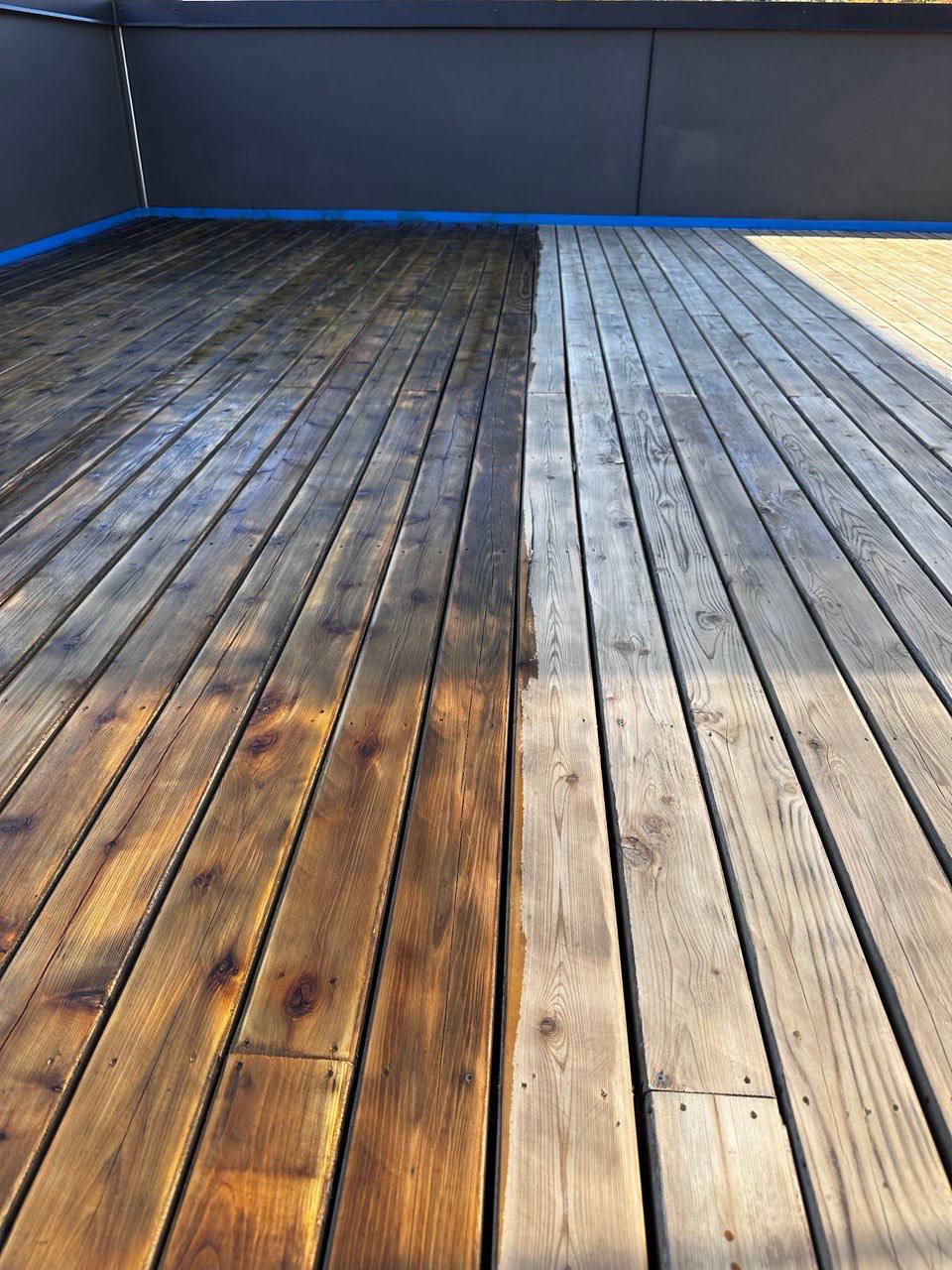
North Carolina’s climate creates some specific challenges for residential wood decks. The combination of humid summers, occasional ice storms, and ground moisture makes our region harder on outdoor wood structures than drier climates. Here’s what to watch for and when to act.
Soft or Rotted Deck Boards
The most visible sign of trouble is deck boards that have softened, split, or turned gray and spongy. Wood rot is caused by prolonged moisture exposure — and in central NC, if a deck isn’t regularly cleaned and sealed, this process accelerates. Soft boards are a safety issue, especially near stairs and edges. Individual boards can often be replaced without rebuilding the entire deck.
Rotted Posts at Grade Level
Posts that contact or sit close to soil are especially vulnerable. Even pressure-treated lumber will eventually succumb to ground contact moisture. If you notice a post that feels soft or shows visible decay at the base, this is a structural concern that needs prompt attention. Post replacement is a job for a skilled contractor, not a DIY project — it requires temporary support of the deck structure.
Loose or Failing Ledger Board
The ledger board is the horizontal board that attaches the deck to your house. If it’s improperly flashed (or not flashed at all), water gets behind it and rots both the ledger and the house rim joist. A failing ledger is one of the most dangerous deck conditions — it’s the type of failure that leads to the deck separating from the house. If you see any gap between the house and the deck, or notice the deck pulling away, call a contractor immediately.
Sagging or Loose Railings
Deck railings must meet code height requirements and resist lateral force. Railings that wobble when pushed, or balusters with excessive gaps, are both safety issues. Railing failures are common and fairly straightforward to correct — new post bases, blocking, and proper fasteners can restore a railing to safe, code-compliant condition.
Annual Maintenance Is Worth It
The best way to avoid expensive deck repairs is annual maintenance — cleaning, inspection, and resealing. A deck that’s properly sealed every 2–3 years stays protected from the moisture damage that causes most of the issues above. Holly Springs Handyman handles deck maintenance, repair, and full rebuilds throughout the Triangle. Learn more about our deck services.